The Mina Company

  • Who We Are
    • About
  • Services
    • At a Glance
    • AI Implementation
    • Digital Advertising
    • Logo + Graphic Design
    • SEO
    • Social Media
    • Website Development
  • Industries We Serve
    • Home Builders & Trades
    • Service-Based Businesses
    • Chiropractic
    • Wellness & Therapy
    • Birth & Perinatal
    • Coaches & Memberships
  • Fractional CMO
  • News + Resources
  • Contact
All Posts By

ericaminadev

Intuitive Business Strategy

Month-to-Month Marketing Retainer: Why Flexible Beats Flat

July 27, 2026
The Mina Company team meeting around a table

Month-to-Month Marketing Retainer: Why Flexible Beats Flat


If you run a seasonal or cyclical business—home services, construction, wellness practices, anything with a busy season and a slow one—you’ve probably felt this exact frustration: paying the same flat marketing retainer in your slowest month as you do in your busiest one.

It doesn’t make sense. And yet it’s still how most agencies operate. A month-to-month marketing retainer fixes that, and it’s exactly the model we build our client relationships around.

The Mina Company team meeting around a table

The flat-retainer problem

Most marketing agencies build one package, lock you into a 6- or 12-month contract, and charge the same amount every single month—regardless of whether you’re slammed with business or in a natural lull. That means:

  • You’re overpaying during slow months for support you don’t need as much
  • You’re underinvested during your busiest months, right when the payoff would be biggest
  • You’re stuck either way, because the flat contract doesn’t flex even if your business obviously does

For a lot of small and medium-sized businesses, this mismatch—flat pricing against a business that isn’t flat at all—is the single biggest reason marketing spend feels like it’s not working.

What a month-to-month marketing retainer should actually mean

A real month-to-month marketing retainer isn’t just “no contract” as a marketing line—it should change how support flexes around you:

  • Turning support up during your in-demand season—launches, peak months, big pushes—when more marketing spend has the clearest payoff
  • Turning it back down during natural lows, without losing momentum, without a penalty, and without a conversation about “breaking contract”
  • A true month-to-month cadence, period. No long-term lock-in disguised as a “partnership commitment”

This isn’t just a nicer way to bill. It changes how your strategy actually gets built, because we’re planning with your seasonality in mind from day one—not bolting flexibility on as an afterthought once you push back on a contract.

Seasonal marketing agency vs. traditional agency: what to ask before you sign

If you’re evaluating a seasonal marketing agency (or any agency, honestly) and your business has any kind of seasonal rhythm, ask directly:

  • “Is this a true month-to-month marketing retainer, or a long-term contract with a flexible-sounding name?”
  • “What happens to my rate if I need to scale down for two months?”
  • “Am I locked into a fixed scope, or can this flex as my priorities shift?”
  • “Is there a penalty or fee for pausing or adjusting support?”

If the answer to any of those is uncomfortable, that’s worth knowing before you sign anything—not after your slow season hits.

How our month-to-month marketing retainer works

We build every engagement as a true month-to-month marketing retainer, and we size the team around you accordingly—sometimes that’s a lighter strategic hand guiding work you’re already doing in-house, sometimes it’s our full team stepping in to execute everything at once. Either way, it’s sized to your season, not a fixed number that made sense back in January.

Ready for a marketing retainer that actually moves with your business? Let’s talk about your season.

Curious what this looks like in practice? See how our Fractional CMO support works.

Share
Intuitive Business Strategy

How Much Does a Fractional CMO Cost for a Small Business?

July 27, 2026
Three Mina Company team members working together on a laptop

How Much Does a Fractional CMO Cost for a Small Business?


This is usually the first question we get, and it’s a fair one. You’re trying to figure out if this is even in the realm of possibility for your business—so let’s talk real numbers.

Two women brainstorming with sticky notes on a whiteboard

The wide range you’ll see everywhere

Search around and you’ll find fractional CMO pricing all over the map—anywhere from a few thousand dollars a month to well over $20,000, depending on the firm, the industry, and how many hours are included. Larger firms working with VC-backed or enterprise-level companies often quote retainers in the higher range, because their clients’ budgets (and complexity) are built for it.

That’s not the range most small and medium-sized businesses are working with, and it’s not the range we work in either.

What actually drives the cost

A few things determine what a fractional CMO engagement should cost you:

  • How much strategic direction vs. hands-on execution you need. A light monthly check-in costs less than a fully embedded team running your channels day to day.
  • Whether you already have marketing help in place. If we’re slotting in alongside an existing hire or vendor to provide direction, that’s a different scope than building your marketing from scratch.
  • How seasonal your business is. This is the one most pricing models ignore completely—and it’s the one that matters most for a lot of the businesses we work with.

What we actually charge

Here’s an honest truth: any fractional CMO or agency that gives you one flat number before understanding your business is guessing. So instead, here’s a real starting point.

Our retainers start at $1,300/month and scale up from there, based on how much strategic direction and hands-on execution you actually need. A light monthly check-in guiding an existing in-house hire costs less than a fully embedded team running your channels day to day—and that’s exactly why we don’t quote one number for every business that asks.

We also don’t do flat annual contracts, and we don’t lock you into a scope that made sense in January but doesn’t in July. We build a month-to-month retainer sized to what you actually need right now—which means during your busy season, you might have our full team running point across every channel, and during a natural lull, you scale back without penalty, without a contract fight, and without paying for capacity you’re not using.

The real comparison to make

Instead of asking “how much does a fractional CMO cost,” ask: “how much am I already spending on marketing that isn’t tied together?” A lot of the businesses we talk to are already paying for an ad budget, a website, some social support—just without anyone making sure it all adds up to something. Adding strategic ownership on top of that spend is often a smaller lift than starting from scratch.

Want a real number for your business, not a guess? Get in touch and we’ll talk through what your season actually calls for.

Share
Intuitive Business Strategy

Fractional CMO vs. Marketing Agency: What’s the Real Difference?

July 27, 2026
Two Mina Company team members reviewing notes and a laptop

Fractional CMO vs. Marketing Agency: What’s the Real Difference?


If you’ve been Googling this (or asking Claude or Chat, let’s be honest), you’ve probably landed on a dozen different definitions, three different price ranges, and zero clear answers. So let’s simplify it.

Here’s the short version: a marketing agency executes. A fractional CMO directs. Most businesses eventually need both—they just don’t realize it until things start feeling scattered.

Erica Vander Sande smiling while working on a laptop

What a marketing agency actually does

A marketing agency is built for execution. You hand over a channel—ads, SEO, social, your website—and they run it. Good agencies are specialists. They know their lane, and they run it well.

What they’re usually not built to do: connect that one channel to everything else happening in your business, or make the call on whether that channel should even be the priority this quarter.

The Mina Company team standing together against a white wall

What a fractional CMO actually does

A fractional CMO sits above the channels. They’re the one asking: is this campaign actually tied to a revenue goal? Are our website, ads, and content saying the same thing to the same person? Is this the right season to be spending more, or pulling back?

It’s strategic ownership—not just another vendor doing more tactical work.

So which one do you need?

Ask yourself these questions honestly:

  • Do you have a documented marketing strategy that ties back to your actual business goals? If not, you need strategic direction before you need more execution.
  • Are you already paying for marketing help (an agency, a freelancer, an in-house hire) but not seeing it add up to anything cohesive? That’s a direction problem, not an execution problem.
  • Do you have plenty of ideas and channels running, but no one connecting the dots? That’s the fractional CMO gap.
  • Do you need someone to just get the campaigns built and running well? That’s the agency lane.

Why we stopped making our clients choose

Here’s the thing: most small and medium-sized businesses don’t have the luxury of hiring a fractional CMO and a full-service agency separately. So we built our model to be both.

When you work with us, you get the strategic ownership of a CMO—someone thinking about your whole business, not just one channel—backed by our actual team of specialists to execute it. If you’ve already got marketing help in place, we slot in alongside them and provide the direction they’ve been missing. If you need more hands, we bring ours.

No long-term contracts. No choosing between “the strategy person” and “the people who actually do the work.” Just one team, sized to what you need this month.


Curious which model actually fits your business right now? Let’s talk it through—no pitch, just an honest conversation.

Curious what this looks like in practice? See how our Fractional CMO support works.

Share
Website Development

When Your Business Grows, Your Website Should Too

February 18, 2026
Erica Vander Sande with the words Let's Talk About Strategy

A strategic guide to website redesign, website refresh, and brand-aligned digital growth

There is a quiet moment in almost every growing business when something starts to feel slightly out of sync.

Nothing is broken.
Your website is not “bad.”
But it no longer feels like a full reflection of who you are now.

Your experience has deepened. Your positioning has sharpened. Your clients may be more refined. Your offers are clearer. Your pricing has likely evolved. You are operating at a different level than you were even a year or two ago.

And yet your website is still telling the older version of the story.

That is usually when we get the call.

At The Mina Company, we work with established, service-based businesses that are growing into their next phase. Most of the time, the issue is not visibility alone. It is alignment. When your website no longer matches your brand authority, your growth goals, or your audience, it quietly creates friction.

A strategic website is not a digital brochure.
It is positioning.
It is infrastructure.
It is a conversion strategy.

When it evolves with your business, momentum follows.


What Does “Updating a Website” Actually Mean?

Many business owners ask:

  • Do I need a brand-new website?
  • Can I just refresh what I have?
  • Is this a design issue or a strategy issue?
  • How do I know if my website is hurting conversions?

The answer depends on your growth stage and goals.

Website evolution typically falls into three categories:

  1. Full website build (from the ground up)
  2. Strategic website refresh or refinement
  3. Brand and website realignment for scaling

Here is what each looks like in practice.


1. Building a New Website From the Ground Up

Best for: Businesses that have outgrown their original positioning, audience, or structure.

When a company evolves significantly, incremental updates are not enough. The foundation itself must shift.

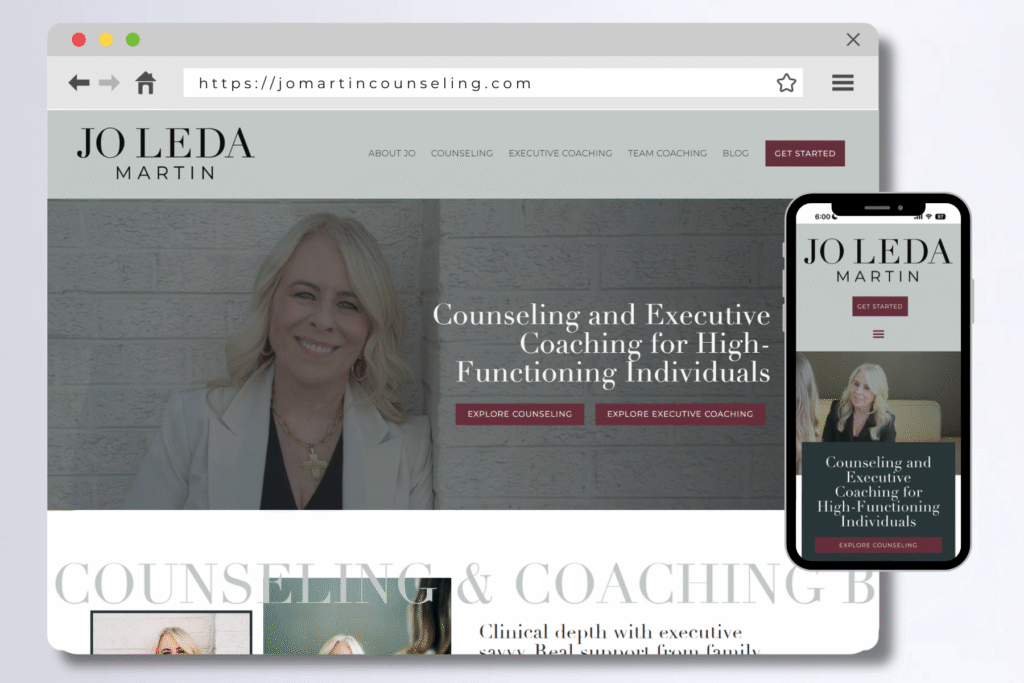
Case Example: Jo Leda Counseling

Jo Leda Counseling

Jo Leda Martin counseling website shown on desktop and mobile

For Jo Leda Counseling, the objective was elevation. The work she was doing with high-capacity leaders had expanded. Her authority had deepened. The website needed to reflect that level of clarity and confidence.

Strategic Focus Areas:

  • Refined positioning for executive leaders and decision-makers
  • Elevated brand visuals aligned with professional authority
  • Clear messaging that bridges personal and professional growth
  • Conversion pathways that feel direct but not pushy

Why a Full Rebuild Was Necessary

A website rebuild is recommended when:

  • Your ideal client has changed significantly
  • Your pricing or service model has evolved
  • Your brand identity has matured
  • Your current structure limits SEO performance
  • Your design undermines perceived authority

Outcome:
A website that supports higher-level clients, clearer authority positioning, and long-term organic visibility.


2. Refining and Refreshing an Existing Website

Best for: Businesses with a strong foundation that needs optimization, clarity, and cohesion.

Not every business needs a full redesign. Sometimes the structure is solid, but messaging and design require refinement.

Case Example: Arnica Mental Health

Arnica Mental Health

Arnica Mental Health already had a functional website. The core structure worked. However, the messaging did not fully reflect specialization areas like ADHD and trauma-informed therapy.

Strategic Refinement Focus:

  • Clarifying specialty keywords (ADHD therapy, trauma therapy, adult mental health)
  • Strengthening on-page SEO and content hierarchy
  • Simplifying user navigation
  • Improving visual cohesion and readability

When a Website Refresh Is the Right Move

A website refresh is often ideal if:

  • Your messaging feels vague
  • Your homepage does not clearly communicate your niche
  • Your SEO is underperforming
  • Visitors are not converting into inquiries
  • Your design feels inconsistent but not fundamentally flawed

Outcome:
Stronger search visibility, clearer specialization authority, and smoother user flow.


3. Aligning Website + Brand for Scalable Growth

Best for: Businesses preparing for expansion, partnerships, speaking, or new offers.

When your brand evolves, your website must support not only credibility but scalability.

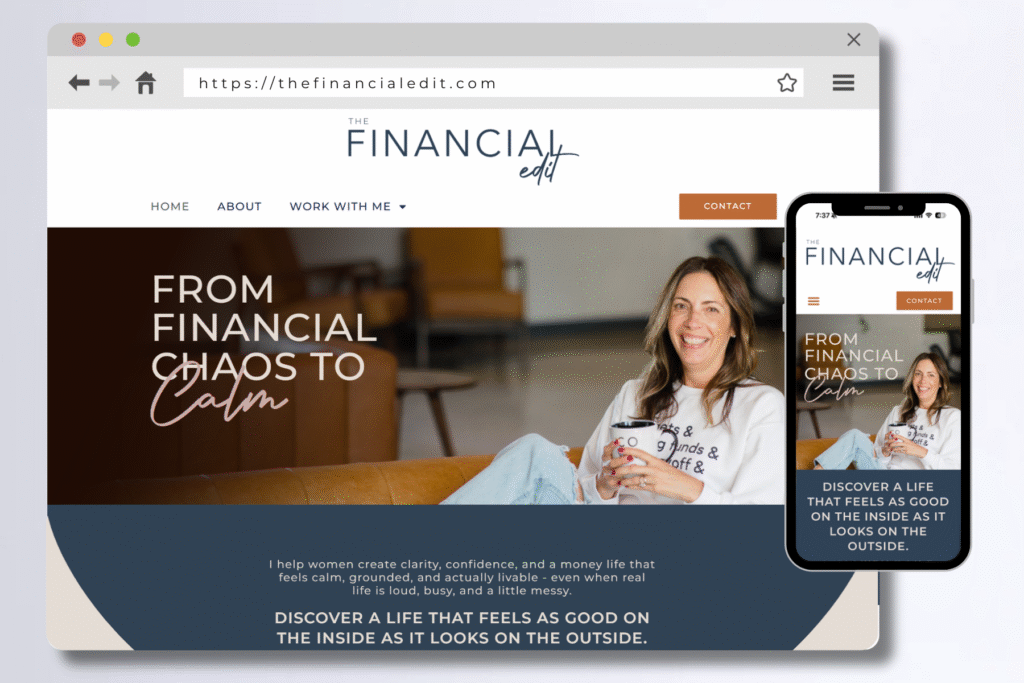
Case Example: The Financial Edit

The Financial Edit

Financial coaching website, From Financial Chaos to Calm, shown on desktop and mobile

The Financial Edit had matured into a more authoritative financial education brand. The website needed to communicate both accessibility and expertise.

Strategic Alignment Focus:

  • Clarifying service and offer hierarchy
  • Strengthening messaging authority without losing warmth
  • Enhancing SEO structure for long-term content growth
  • Creating a cohesive visual identity aligned with trust

Why Alignment Matters for Growth

When preparing to scale, your website should:

  • Support thought leadership
  • Convert higher-value clients
  • Reflect brand maturity
  • Align visually and strategically across all platforms
  • Work seamlessly with email, ads, and content marketing

Outcome:
A website positioned as a growth asset rather than a static online presence.


How to Know If It’s Time to Redesign or Refresh Your Website

You may need a website redesign or strategic refresh if:

  • You hesitate to send people to your website.
  • Your brand visuals have evolved but your website has not.
  • Your offers have changed or expanded.
  • Your pricing has increased.
  • Your inquiry rate has plateaued.
  • You are attracting the wrong type of client.
  • Your messaging no longer feels accurate.

A high-performing website should:

  • Clearly communicate who you serve
  • Establish authority quickly
  • Guide visitors through a natural conversion path
  • Support SEO visibility
  • Reflect your current brand level

If it does not, alignment work may be necessary.


Strategy First. Design Second.

One of the biggest misconceptions about website redesign is that it is primarily about aesthetics.

Design matters. But strategy matters more.

At The Mina Company, website projects begin with:

  • Audience clarity
  • Offer refinement
  • Brand voice alignment
  • SEO structure planning
  • Conversion pathway mapping

Because a visually beautiful website without strategic positioning does not convert.

A strategically built website becomes:

  • A client acquisition system
  • A credibility anchor
  • A scalable marketing asset
  • A long-term visibility engine

What Results Can a Strategic Website Deliver?

When aligned properly, a website can:

  • Increase qualified inquiries
  • Improve search engine rankings
  • Attract higher-level clients
  • Shorten sales cycles
  • Strengthen perceived authority
  • Support long-term content marketing

Website alignment is not a cosmetic update. It is operational infrastructure for growth.


Frequently Asked Questions

1. How do I know if I need a full website redesign or just a refresh?

If your audience, pricing, or positioning has changed significantly, a full redesign may be necessary. If your structure is solid but your messaging or design feels outdated, a strategic refresh may be sufficient. A professional audit can clarify which approach supports your growth goals.

2. How often should a business update its website?

Most growing businesses should revisit their website strategy every 18–36 months. This does not always mean a redesign, but it should include SEO updates, messaging refinement, and conversion optimization to stay aligned with market shifts.

3. Does redesigning a website help with SEO?

Yes—when done strategically. A redesign that includes keyword optimization, content restructuring, internal linking, and technical improvements can significantly improve organic visibility. However, aesthetic changes alone will not impact search performance.


A Website Should Reflect Where You’re Going

Your website should not just reflect where you have been.
It should support where you are headed.

If your business has evolved, your digital presence should evolve with it.

Whether that means a full rebuild, a thoughtful refinement, or a strategic realignment, alignment is often the missing piece between growth and sustainable momentum.

When strategy, structure, and brand clarity work together, your website becomes more than a platform.

It becomes infrastructure.

Thinking about a website refresh? See our website development services.

Share
Intuitive Business Strategy

The Heart of a Mission-Driven Non-Profit Marketing Agency

January 19, 2026
Close-up of a woman's hands in her lap with The Mina Company logo

Marketing That Serves People, Not Just Metrics

At The Mina Company, we believe marketing should do more than generate leads or increase revenue. It should serve people.

That belief is why our work with nonprofits is not a side offering or a passion project tucked into the margins. It is woven into the core of who we are and how we operate as a non-profit marketing agency.

We partner with organizations doing real, on-the-ground good. They are supporting families, youth, and entire communities. We help their messages reach farther, land deeper, and create sustainable impact over time.

Because when nonprofits thrive, communities do too.


What Makes a Non-Profit Marketing Agency Different?

Nonprofit marketing is not simply business marketing with a smaller budget.
It requires a different strategy, a different pace, and a different level of care.

As a mission-driven non-profit marketing agency, our work is guided by principles that reflect how nonprofits actually operate:

  • Mission-first strategy
    Clarity comes before campaigns. Every message must align with the organization’s purpose, values, and maintain community trust.
  • Sustainable growth models
    We design marketing systems that support long-term visibility and funding, not burnout-driven urgency or constant crisis mode.
  • Trust-based storytelling
    We prioritize dignity, accuracy, and human-centered narratives over shock value or fear-based fundraising.
  • Long-term marketing systems
    We focus on donor retention, consistent messaging, and repeatable campaigns rather than one-time fundraising spikes.

The goal is not just visibility. The goal is stability, consistency, and confidence—for nonprofit leaders, donors, and the people they serve.


The Heart Behind the Work: Community Impact in Northern Colorado

Much of our nonprofit marketing work is rooted in Northern Colorado, where community connection means knowing your neighbors, supporting local families, and showing up when it counts.

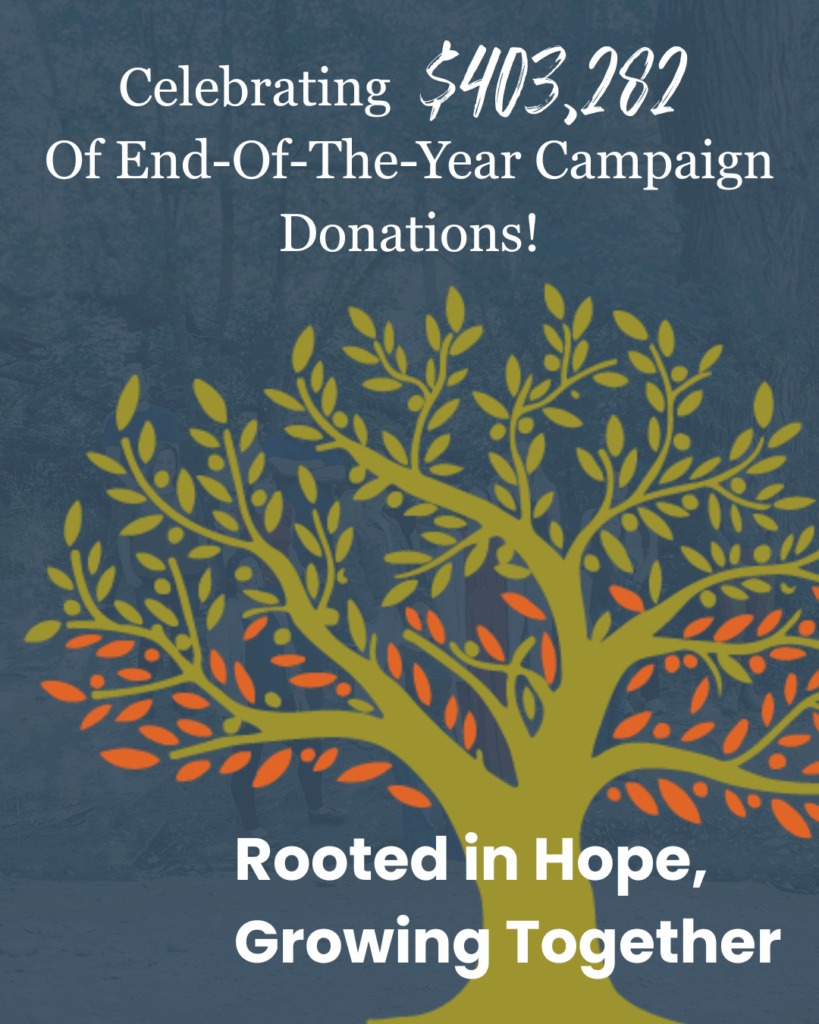
Spotlight: The Matthews House

Graphic celebrating $403,282 in end-of-year campaign donations: Rooted in Hope, Growing Together

The Matthews House supports youth and families navigating housing instability, trauma, and major life transitions. Their work is deeply relational, and their marketing must reflect that same care and integrity.

Our partnership focuses on building clarity and momentum through:

  • Fundraising campaign strategy, including end-of-year appeals and Colorado Gives campaigns
  • Clear, human-centered storytelling that reflects real experiences
  • Donor communication and retention strategies
  • Digital advertising and email campaigns that feel grounded and respectful

Impact areas often highlighted through marketing include:

  • Number of youth and families served annually
  • Dollars raised through community-supported campaigns
  • Local business partnerships to expand support networks

These metrics matter—not as bragging points, but as proof that thoughtful nonprofit marketing helps essential services reach the people who need them most.


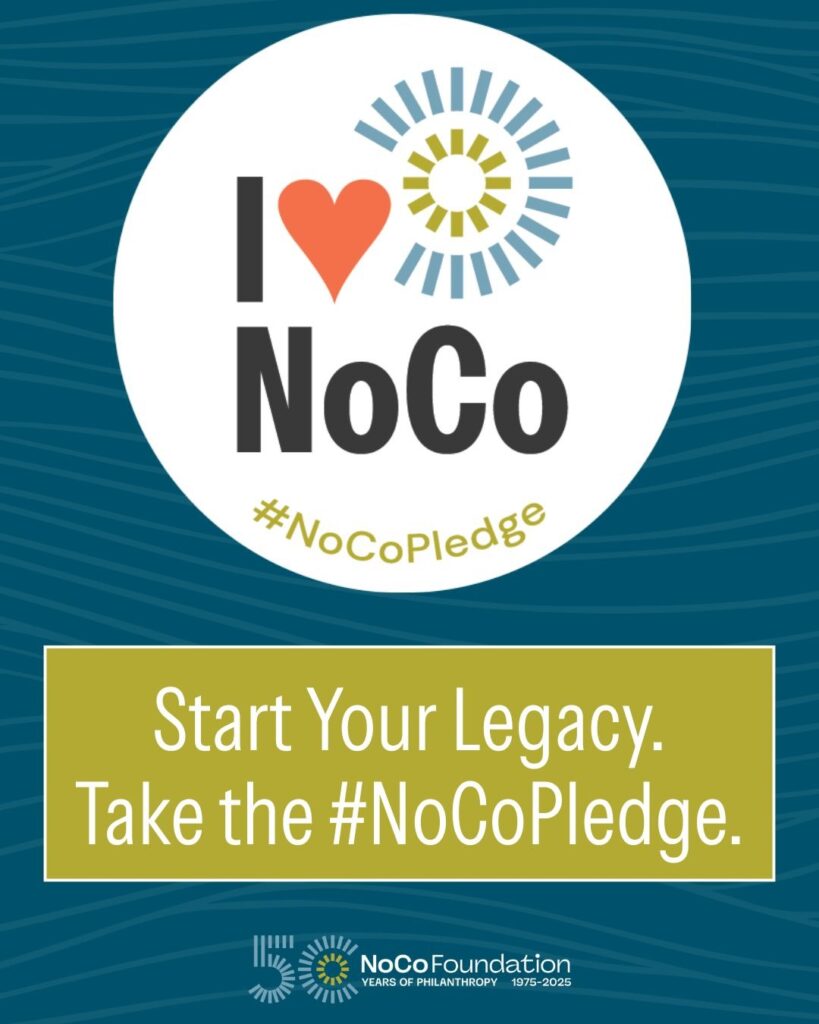
Spotlight: NoCo Foundation

I Love NoCo #NoCoPledge graphic: Start Your Legacy

The NoCo Foundation exists to support regional non-profit organizations—from teacher grants to community giving initiatives that directly support Northern Colorado families. 

Our work together emphasizes:

  • Community-centered messaging that reflects local values
  • Campaign clarity with simple, accessible calls to action
  • Removing friction so giving feels welcoming, not overwhelming

Impact measures commonly supported through marketing include:

  • Grants awarded or families supported
  • Funds distributed directly into the local community
  • Community partners engaged through giving initiatives

This level of impact does not happen by accident. It happens when nonprofit missions are aligned and supported by marketing that understands both strategy and heart.


Why Nonprofits Choose The Mina Company

Nonprofit leaders carry a lot.

You are balancing funding, staffing, programming, compliance, donor relationships, and community trust, often with limited resources and very little margin for error.

As a non-profit marketing agency, we step in with clarity and steadiness.

Nonprofits working with us often discover:

  • We help you with clear messaging
  • We help you have a consistent presence
  • We help you to do the right things well

Our role is to act as a strategic partner, translating your mission into marketing that works, is true to the mission, and supports your long-term sustainability.


Marketing as a Form of Service

At The Mina Company, we do not separate strategy from values.

We believe:

  • Marketing can be ethical
  • Growth can be sustainable
  • Impact can be measured without losing soul

Supporting organizations like The Matthews House and The NoCo Foundation is not just part of our portfolio. It is part of how we define success as a non-profit marketing agency.

Because the most effective marketing does not just grow organizations. It strengthens communities.


Looking for a Non-Profit Marketing Agency That Gets It?

If you are a nonprofit leader looking for marketing support that honors your mission, your capacity, and your people, we would love to connect.

The Mina Company partners with nonprofits committed to building safer, stronger, and more supported communities.

Let’s make sure your message reaches the people who need it most. Contact us today!


Frequently Asked Questions

What does a non-profit marketing agency do?

A non-profit marketing agency helps mission-driven organizations increase visibility, fundraising, and community engagement through ethical, sustainable marketing strategies tailored to nonprofit needs, budgets, and values.

How is nonprofit marketing different from traditional marketing?

Nonprofit marketing prioritizes trust, donor relationships, mission clarity, and long-term sustainability rather than quick conversions or aggressive sales tactics. It focuses on people, not just performance metrics.

Why should a nonprofit work with a specialized marketing agency?

A specialized non-profit marketing agency understands the unique challenges nonprofits face—limited resources, donor fatigue, compliance requirements, and community trust—and builds strategies that support long-term impact without burnout.

Do you offer nonprofit pricing or discounted rates?

Yes. Supporting nonprofit organizations is a core part of our work. We offer thoughtful pricing structures designed to reflect nonprofit budgets while still delivering strategic, high-quality marketing support.

Contact us today to discuss strategies for your non-profit.

Share
local Marketing

Behind the Proposal: How We Tailor Marketing Strategies for Each Business

December 27, 2025
Mina Company team member typing on a laptop

If you’ve ever received a marketing proposal that felt generic, you’re not alone.

For many local businesses marketing advice often arrives in the form of pre-built packages that don’t reflect real community needs, limited budgets, or internal capacity. At The Mina Company, we take a different approach. Every proposal we create is fully customized to the business or organization that we’re working with because effective local marketing marketing can’t be built from templates.

Mina Company team member typing on a laptop

Local Businesses Need Marketing That Reflects Their Community

Local marketing is deeply personal. What works for a national brand rarely works the same way for a business rooted in a specific town, city, or region.

Before building a proposal, we look closely at:

  • Your local audience and service area
  • How people in your community actually find and choose businesses
  • Your reputation, referrals, and word-of-mouth presence
  • Local search visibility and SEO opportunities
  • Community partnerships, events, and relationships

A strong local marketing strategy might prioritize Google search visibility, community storytelling, local partnerships, or hyper-focused campaigns rather than broad national tactics. That’s why our proposals are shaped around where you operate and who you serve, not just what services you sell.

Strategy Comes Before Services

We don’t start proposals by listing deliverables.
We start with strategy.
That means understanding:

  • What growth looks like for your organization
  • What success should realistically be measured against
  • Which marketing channels will actually convert for your audience
  • What can be sustained by your team over time

For some local businesses, SEO and website optimization are the strongest long-term investment.
Our proposals explain why we’re recommending a strategy—not just what we’ll do.

Built Around Capacity, Not Just Goals

One of the most important (and often missing) elements of marketing proposals is capacity.
We account for:

  • Team size and internal resources
  • Decision-making bandwidth
  • Review cycles and approval processes
  • Seasonal fluctuations in workload or funding

This matters even more in small business marketing, where teams are often lean and already stretched. Our goal is to support growth without creating additional strain.

Clear Scope Creates Better Partnerships

Every proposal we deliver includes clear expectations around:

  • Scope of work
  • Roles and responsibilities
  • Communication cadence
  • Success metrics and reporting
  • How the strategy can evolve over time

This clarity is especially important for nonprofits managing boards, grants, or multiple stakeholders, and for local businesses juggling operations alongside marketing.

A Proposal Is the Foundation of Long-Term Marketing Success

We don’t view proposals as sales documents.
We see them as the foundation of a working relationship.
A strong proposal should:

  • Reflect a deep understanding of your business or mission
  • Align with your local audience or donor base
  • Support sustainable, realistic growth
  • Feel grounded in how your organization actually operates

If a proposal feels like it could only belong to your business or nonprofit, then it’s doing its job.

Final Thoughts

Local marketing works best when strategy is built around real people, real communities, and real capacity.

That’s why we custom tailor every proposal we create.
Because meaningful growth doesn’t come from templates—it comes from alignment.

If you’re looking for a marketing partner who understands local markets, nonprofit realities, and sustainable growth, we’d love to start with a conversation. Reach out for a complimentary 30 minute consultation and custom proposal today!

Share
SEO

Is GEO the New SEO? What This Means for Your Small Business Website

November 25, 2025
Erica Vander Sande sitting on the floor with the words Let's talk about A.I.
Erica Vander Sande sitting beside a laptop with the words Let's talk about A.I.

Your Website’s Next Big Shift: Is GEO Changing SEO for Small Businesses?

If you’ve been in business for a while, you’ve probably heard of SEO — search engine optimization. It’s the art and science of helping Google understand your website so the right people can find you.

But lately, there’s a new term floating around: GEO, or Generative Engine Optimization.
If you’ve caught yourself thinking, “Do I really need to learn another marketing acronym?” — you’re not alone. Let’s break it down in plain English.


What SEO Actually Does

Traditional SEO helps your website show up in search engines like Google when someone types in a query such as:

  • “chiropractor near me”
  • “custom home builder in Fort Collins”

SEO focuses on:

  1. Writing helpful website copy that directly answers people’s questions
  2. Adding relevant keywords that clearly describe your business
  3. Optimizing meta titles, descriptions, and internal links so search engines can find you
  4. Building trust online through reviews, backlinks, and consistent content

It’s a long game — but when it’s done right, it creates sustainable visibility that keeps paying off month after month.


What Is GEO — and Why Is Everyone Talking About It?

GEO stands for Generative Engine Optimization.

It’s the next evolution of SEO — designed for AI-powered search engines like ChatGPT, Perplexity, and Google’s AI Overviews.

Instead of only optimizing for keywords, GEO helps AI understand your brand and content contextually. These new search engines don’t just list links — they synthesize answers.

When someone asks:

“Who are the best custom home builders in Northern Colorado?”

AI will summarize the answer, pulling information from trusted, well-structured sources.
If your website isn’t organized in a way AI can understand, you may be left out of that conversation entirely.

In short:

  • SEO helps you get found.
  • GEO helps you get included in the answers.

How to Prepare for GEO (Without Starting Over)

You don’t need to rebuild your entire marketing strategy. The good news? Strong SEO naturally builds a foundation for GEO.

Here’s how to start optimizing right now:

1. Keep Creating Helpful Content

Publish blogs, FAQs, and resource pages that answer your audience’s real questions.
AI tools reward clarity, completeness, and usefulness.

2. Use Natural, Specific Language

Instead of generic terms like “quality services,” say:

  • “family chiropractic care in Fort Collins”
  • “custom homes with primary suites on the main floor”

This helps AI recognize what you offer and who you serve.

3. Add Structured Context

Make sure your About and Service pages clearly state:

  • Who you are
  • What you do
  • Where you serve

Generative search engines rely on this structured clarity when describing your brand.

4. Build for Long-Term Visibility

Update your Google Business Profile, publish monthly blog posts, and keep your brand voice consistent across all channels.
Consistency builds credibility — a key trust signal for both Google and AI.

5. Focus on Foundations, Not Fads

You don’t need to chase the latest AI trends.
Instead, build an aligned, authentic online presence that tells every search engine exactly who you are and how you help.


The Bottom Line

SEO isn’t dead — it’s evolving.
Businesses that stay curious, intentional, and proactive will always come out ahead.

If you’re feeling uncertain about the shift from SEO to GEO, that’s where we come in.

At The Mina Company, we blend strategy, SEO, and intuitive alignment to help you stay visible — no matter how search evolves. Lets chat about your next move!

Curious where your business stands?
Book a quick SEO & GEO Tune-Up Session and get a clear roadmap for your next steps.


FAQ: GEO vs. SEO for Small Businesses

1. What’s the difference between SEO and GEO?
SEO helps your website appear in traditional search engine results. GEO, or Generative Engine Optimization, ensures your content is easily understood by AI tools like ChatGPT and Google AI, so you’re included when those tools generate summarized answers.

2. Do I need to replace my SEO strategy with GEO?
No. Strong SEO creates the foundation for GEO. You simply need to enhance clarity, structure, and context so your content is AI-readable.

3. How can small businesses start with GEO today?
Start by creating helpful, human-centered content, using clear language about what you do and where you serve, and ensuring consistent information across your website and Google Business profile. If you are exploring how your small business can use AI, check out this post.


Written by The Mina Company — your partner in intuitive marketing, SEO, and AI-ready strategy for small businesses.

Share
Marketing

How to Choose the Right Marketing Channels for Your Nonprofit

November 12, 2025
Erica Vander Sande surrounded by marketing channel icons for email, social media, podcasts and websites

A Simple Guide to Finding Focus and Making a Bigger Impact

Marketing channel icons: email, Facebook, Instagram, Google, podcast, TikTok, LinkedIn, Pinterest and X

Marketing a nonprofit can sometimes feel like juggling flaming torches while walking a tightrope. Between social media, email campaigns, Google Ads, community events, and donor outreach, it’s easy to wonder:

“Where should we even focus?”

The truth is, you don’t need to do everything to make an impact — you just need to do the right things, consistently. Let’s simplify your strategy.


Step 1: Start with Your People

Every strong marketing plan begins with understanding who you’re talking to. Your audience determines your strategy — not the other way around.

Ask yourself:

  • Who are our biggest supporters right now?
  • Where do they spend time — online and offline?
  • What motivates them to give, volunteer, or get involved?

Examples:

  • If your donors are local families who attend community events, focus on email, local partnerships, and social media (especially Facebook or Instagram).
  • If your audience is business owners or grant partners, prioritize LinkedIn, newsletters, and storytelling blogs to build credibility.

Pro Tip: Build simple audience profiles or personas for your main supporter types — this makes every marketing choice clearer.


Step 2: Match Your Mission to Your Medium

Each marketing channel serves a unique purpose. When you match your mission with the right medium, your message lands more effectively.

ChannelBest ForExample Use
Social MediaStorytelling & connectionShare photos, impact stats, and personal stories that humanize your mission
EmailDeepening relationshipsSend updates, success stories, and clear calls to action for donations or events
Website + SEOVisibility & credibilityMake sure every campaign leads back to a well-optimized home base
Google Ads / Meta AdsGrowth & awarenessUse grants or paid campaigns to reach new donors or volunteers
Events + Local PartnershipsTrust & communityBuild in-person relationships and brand recognition in your area

Pro Tip: Pair one digital growth channel (like Ads or SEO) with one relationship channel (like email or events) to balance reach and retention.


Step 3: Choose No More Than Three Core Channels

Most nonprofits spread themselves too thin. You don’t have to be everywhere — just show up well where it matters most.

Choose up to three channels that align with:

  1. Your audience
  2. Your goals
  3. Your team’s capacity

Examples:

  • A youth-focused nonprofit might use Instagram, email, and school partnerships.
  • A community health organization might focus on Facebook, Google Ads, and newsletters.
  • A foundation or grantmaker might prioritize LinkedIn, PR, and website content.

Pro Tip: Depth beats breadth — consistency builds trust faster than being everywhere inconsistently.


Step 4: Measure What Matters

It’s easy to chase vanity metrics like post likes or follower counts. Instead, track metrics that reflect real connection and measurable impact.

Focus on:

  • Email: open and click-through rates
  • Website: visits, donations, and time on page
  • Events: attendance, sign-ups, and repeat engagement
  • Volunteers: new sign-ups or hours served

Ask yourself regularly:

“Is this channel helping us deepen relationships or drive meaningful action?”
If not, it might be time to adjust your focus.

Pro Tip: Review your analytics monthly and quarterly — patterns reveal where your real momentum lives.


Step 5: Keep It Human

At its heart, nonprofit marketing isn’t about being trendy — it’s about being consistent, kind, and clear.

Your mission deserves visibility, but it shouldn’t come at the cost of burnout or confusion.

  • Start small and build sustainably.
  • Keep your messaging rooted in your values.
  • Remember: the best marketing channel is the one that helps people feel connected to your cause.

Takeaway

You don’t have to master every platform — just choose the ones that make the most sense for your team and community.

If you’re not sure where to start (or tired of guessing what’s working), we can help.

Our team specializes in creating holistic marketing strategies for nonprofits. Book a Nonprofit Marketing Strategy Session with The Mina Company and get a clear, actionable roadmap for your organization — so you can spend less time juggling and more time creating impact.

Let’s get started →


FAQ: Nonprofit Marketing Channels

1. What are the best marketing channels for nonprofits?
The best channels depend on your audience and goals, but most nonprofits find success using a mix of email marketing, social media, and local partnerships. Add Google Ads or SEO for growth and visibility.

2. How many marketing channels should a nonprofit focus on?
Three is ideal. Choosing fewer channels allows for deeper engagement, stronger consistency, and better use of limited resources.

3. How can we tell if our marketing channels are working?
Track metrics tied to impact — donations, volunteer sign-ups, event attendance, and engagement rates. If a platform isn’t driving meaningful action, it may not be the right fit for your audience.


Written by The Mina Company — intuitive marketing strategy for nonprofits that want to grow with purpose.

Share
Website Development

Building a Strong Online Presence for Your Therapy Practice: Website Essentials

September 8, 2025
Two Mina Company team members holding laptops

For most people seeking therapy, the first step isn’t picking up the phone—it’s Googling.

That means your website isn’t just a “digital business card.” It’s often the first impression a potential client has of your practice. A thoughtful, well-optimized site can make the difference between someone booking a session…or clicking away to the next therapist down the street.

At The Mina Company, we help mental health practices across Colorado strengthen their online presence, starting with a website that’s both beautiful and functional. Here’s what every therapy and counseling website design needs in 2025.


1. Clear Services & Specialties

Potential clients want to know right away if you’re the right fit. Make your specialties visible on your homepage and services page. For example:

  • Anxiety and stress management
  • Couples counseling
  • Teen therapy
  • Trauma-informed care

Pro Tip: Use Colorado-specific keywords (“Fort Collins teen therapy” or “Denver anxiety counseling”) to boost your search ranking.


2. Simple Ways to Book or Contact

Therapy clients often reach out in moments of stress or vulnerability. The booking process should be simple and welcoming:

  • Click-to-call buttons for mobile visitors
  • A clear “Request an Appointment” button on every page
  • HIPAA-compliant forms or portals for intake

The easier you make it, the more likely someone will take that first step.


3. Strong Local SEO

Showing up in “therapist near me” searches is essential for Colorado practices competing in places like Denver, Boulder, or Fort Collins. Make sure your site includes:

  • City-specific keywords in titles and headings
  • Embedded Google Maps on your contact page
  • Blog posts tied to local needs (e.g., “Managing Stress During Colorado Wildfire Season”)

4. A Welcoming, Professional Counseling Website Design

A therapy website should feel calming, trustworthy, and approachable—not overwhelming or clinical. The design should reflect your practice’s energy while staying professional.

Think: warm imagery, clear fonts, and simple navigation that helps people feel at ease.

This is where thoughtful counseling website design comes in—it’s about more than looks. It’s about creating a site that reassures potential clients that they’re in the right place.


5. Optimized for AI Search

With Google’s new AI-driven results (SGE), it’s not enough to just have a website. Your site should include:

  • Conversational FAQs (e.g., “How much does counseling cost in Colorado?”)
  • Clear, structured answers that AI search can easily pull from
  • Up-to-date content that signals authority and relevance

This ensures your practice continues showing up in both traditional and AI-driven search results.


6. Ethical Testimonials & Reviews

If clients are willing to share, testimonials can be powerful. But they must be shared ethically and in compliance with privacy laws.

Pair these with reviews on your Google Business Profile to build trust and improve your local rankings.


Why Work with a Marketing Partner Who Gets Counseling Website Design

Building or refreshing your practice website isn’t just about design—it’s about making sure your site speaks to the people who need you most, while staying compliant and competitive.

The Mina Company helps therapy practices across Colorado create websites that are:
✅ HIPAA-aware
✅ SEO and AI-optimized
✅ Welcoming and easy to navigate
✅ Built to convert visitors into clients


Ready to Refresh Your Website?

👉 Schedule a Consultation with The Mina Company and let’s make sure your online presence reflects the quality of care you provide.

Thinking about a website refresh? See our website development services.

Share
Uncategorized

The Unique Marketing Challenges of Mental Health Practices (and How to Overcome Them)

September 8, 2025
Four women chatting over coffee in a bright office

Running a successful counseling marketing agency or mental health practice in Colorado goes beyond providing excellent care—it also requires getting your name in front of the people who need you most. But here’s the catch: marketing a therapy or counseling practice is not the same as marketing a restaurant, yoga studio, or even another type of healthcare provider.

Mental health providers face unique challenges when it comes to visibility, compliance, and client trust. The good news? With the right strategy, these challenges can be turned into growth opportunities.

At The Mina Company, we’ve supported therapy practices across Colorado, and we’ve seen firsthand what works—and what doesn’t.


1. HIPAA & Compliance Concerns

Unlike most industries, mental health practices must navigate strict privacy regulations that make traditional marketing tricky. You can’t share patient photos or testimonials without explicit consent, and re-targeting ads on platforms like Facebook or Instagram are limited in healthcare categories.

How to Overcome It:

  • Focus on educational content (blogs, FAQs, workshops).
  • Highlight your expertise without disclosing personal information.
  • Work with an agency that knows the nuances of healthcare ad policies.

2. Stigma Around Mental Health

Even in 2025, stigma can prevent people from reaching out for help. Marketing a therapy practice requires sensitivity—balancing hopeful messaging with professionalism, and making clients feel safe from the very first click.

How to Overcome It:

  • Use approachable, empathetic language in your website copy and ads.
  • Share content that normalizes therapy (e.g., “What to Expect in Your First Counseling Session”).
  • Build community trust through local partnerships and resources.

3. Local Counseling Marketing Agency Competition in Colorado

Denver, Boulder, Fort Collins—Colorado is filled with talented therapists and growing group practices. Standing out online can feel overwhelming, especially if your competitors have been established for years.

How to Overcome It:

  • Prioritize local SEO so your practice shows up in “therapist near me” searches.
  • Encourage ethical reviews on Google Business Profile.
  • Create Colorado-specific content (e.g., stress during wildfire season, coping with altitude-related anxiety).

4. Balancing Marketing with Client Care

Most therapists didn’t go into the counseling marketing agency field to spend hours on SEO or ad campaigns. Between client sessions, billing, and continuing education, marketing often falls to the bottom of the list.

How to Overcome It:

  • Automate where you can (social media scheduling, email sequences).
  • Outsource tasks like SEO, website updates, and ad management.
  • Focus your in-house time on authentic storytelling or thought-leadership content.

5. Rapidly Changing Digital Landscape

With Google’s shift toward AI-powered search results (SGE) and new privacy restrictions on ads, the digital landscape is evolving fast. What worked in 2022 doesn’t necessarily work in 2025.

How to Overcome It:

  • Make sure your website is AI-optimized (clear FAQs, structured content, conversational answers).
  • Stay up to date with healthcare advertising policies.
  • Partner with a marketing agency that integrates AI SEO strategies built for the future of search.

Why It Pays to Have a Marketing Partner Who Understands Mental Health

At The Mina Company, we believe marketing for therapists should be ethical, strategic, and deeply human. We help counseling practices in Colorado cut through the noise with marketing that respects client privacy, connects with your community, and drives consistent inquiries.


Ready to Grow Your Counseling Marketing Agency (Without Adding More to Your Plate)?

👉 Schedule a Consultation with The Mina Company and let’s build a marketing plan that works for you—and the people you serve.

Share
Next

Follow us on the gram!

Ep. 2 is out now! Avoiding the Hard 🙅‍♀️

Over my 14th anniversary dinner, I caught myself saying I just didn't want any more hard. And then spent two days realizing how much energy I've wasted trying to dodge the hard things instead of trusting I can get through them. 

This episode gets into grief, the anxiety that shows up even when life is good, the versions of yourself that still have a voice in your head, and learning to be the one who steps up for yourself. Business, motherhood, money, grief, the messy middle of all of it.

New episodes every Wednesday. Follow so you don't miss what's next.
•
Follow
Ep. 2 is out now! Avoiding the Hard 🙅‍♀️ Over my 14th anniversary dinner, I caught myself saying I just didn't want any more hard. And then spent two days realizing how much energy I've wasted trying to dodge the hard things instead of trusting I can get through them. This episode gets into grief, the anxiety that shows up even when life is good, the versions of yourself that still have a voice in your head, and learning to be the one who steps up for yourself. Business, motherhood, money, grief, the messy middle of all of it. New episodes every Wednesday. Follow so you don't miss what's next.
5 days ago
View on Instagram |
1/5
We stopped making our clients choose.

Growing businesses get handed the same either/or: a fractional CMO to lead the team you already have, or an agency to run things for you. But an agency often works on its own track, separate from your people. And most small businesses can't afford both.

So we built Mina to be both. You get the strategic ownership of a CMO backed by a team to execute it. Already have marketing help? We lead them and bring the direction they've been missing. Need more hands? We bring ours.

And it flexes. Full team in your busy season, a lighter touch in the lull. Month to month, so you never pay for more than the moment calls for.

Lets chat about what working with The Mina Company can look like for you theminacompany.com
•
Follow
We stopped making our clients choose. Growing businesses get handed the same either/or: a fractional CMO to lead the team you already have, or an agency to run things for you. But an agency often works on its own track, separate from your people. And most small businesses can't afford both. So we built Mina to be both. You get the strategic ownership of a CMO backed by a team to execute it. Already have marketing help? We lead them and bring the direction they've been missing. Need more hands? We bring ours. And it flexes. Full team in your busy season, a lighter touch in the lull. Month to month, so you never pay for more than the moment calls for. Lets chat about what working with The Mina Company can look like for you theminacompany.com
6 days ago
View on Instagram |
2/5
Some client relationships go all the way back. @lightcenterinc  is one of them.

They were one of our very first clients, and all these years later, they're still with us. 

The Light Center is a locally operated lighting company that knows lighting inside and out. They sell lamps, fixtures, outdoor lighting, ceiling fans, and even furniture and decor. So their website had to work as hard as they do. We built it to serve every kind of customer they have, with a live chat that connects visitors straight to their sales team, a smooth connection to their ecommerce platform, and a billing portal that makes life easier for their existing customers.

They came to us with strong SEO already in place, and we made it stronger. These days we handle whatever they need, website updates, SEO, digital ads, and everything in between.

This is what it looks like when a business and its marketing partner grow up together.

Looking for a team to grow with you? DM us or reach out at theminacompany.com
Some client relationships go all the way back. @lightcenterinc  is one of them.

They were one of our very first clients, and all these years later, they're still with us. 

The Light Center is a locally operated lighting company that knows lighting inside and out. They sell lamps, fixtures, outdoor lighting, ceiling fans, and even furniture and decor. So their website had to work as hard as they do. We built it to serve every kind of customer they have, with a live chat that connects visitors straight to their sales team, a smooth connection to their ecommerce platform, and a billing portal that makes life easier for their existing customers.

They came to us with strong SEO already in place, and we made it stronger. These days we handle whatever they need, website updates, SEO, digital ads, and everything in between.

This is what it looks like when a business and its marketing partner grow up together.

Looking for a team to grow with you? DM us or reach out at theminacompany.com
Some client relationships go all the way back. @lightcenterinc  is one of them.

They were one of our very first clients, and all these years later, they're still with us. 

The Light Center is a locally operated lighting company that knows lighting inside and out. They sell lamps, fixtures, outdoor lighting, ceiling fans, and even furniture and decor. So their website had to work as hard as they do. We built it to serve every kind of customer they have, with a live chat that connects visitors straight to their sales team, a smooth connection to their ecommerce platform, and a billing portal that makes life easier for their existing customers.

They came to us with strong SEO already in place, and we made it stronger. These days we handle whatever they need, website updates, SEO, digital ads, and everything in between.

This is what it looks like when a business and its marketing partner grow up together.

Looking for a team to grow with you? DM us or reach out at theminacompany.com
Some client relationships go all the way back. @lightcenterinc  is one of them.

They were one of our very first clients, and all these years later, they're still with us. 

The Light Center is a locally operated lighting company that knows lighting inside and out. They sell lamps, fixtures, outdoor lighting, ceiling fans, and even furniture and decor. So their website had to work as hard as they do. We built it to serve every kind of customer they have, with a live chat that connects visitors straight to their sales team, a smooth connection to their ecommerce platform, and a billing portal that makes life easier for their existing customers.

They came to us with strong SEO already in place, and we made it stronger. These days we handle whatever they need, website updates, SEO, digital ads, and everything in between.

This is what it looks like when a business and its marketing partner grow up together.

Looking for a team to grow with you? DM us or reach out at theminacompany.com
•
Follow
Some client relationships go all the way back. @lightcenterinc is one of them. They were one of our very first clients, and all these years later, they're still with us. The Light Center is a locally operated lighting company that knows lighting inside and out. They sell lamps, fixtures, outdoor lighting, ceiling fans, and even furniture and decor. So their website had to work as hard as they do. We built it to serve every kind of customer they have, with a live chat that connects visitors straight to their sales team, a smooth connection to their ecommerce platform, and a billing portal that makes life easier for their existing customers. They came to us with strong SEO already in place, and we made it stronger. These days we handle whatever they need, website updates, SEO, digital ads, and everything in between. This is what it looks like when a business and its marketing partner grow up together. Looking for a team to grow with you? DM us or reach out at theminacompany.com
7 days ago
View on Instagram |
3/5
At Mina, we make sure clarity isn't a luxury only big companies can afford.

We connect your ads, your website, your analytics, and your CRM so everything lives in one place, giving you accurate tracking and reporting to build your strategy on, and saving you money you'd otherwise sink into the places that aren't performing.

Whether you're a large company or small business, all our clients deserve that.

DM us or reach out at theminacompany.com
At Mina, we make sure clarity isn't a luxury only big companies can afford.

We connect your ads, your website, your analytics, and your CRM so everything lives in one place, giving you accurate tracking and reporting to build your strategy on, and saving you money you'd otherwise sink into the places that aren't performing.

Whether you're a large company or small business, all our clients deserve that.

DM us or reach out at theminacompany.com
At Mina, we make sure clarity isn't a luxury only big companies can afford.

We connect your ads, your website, your analytics, and your CRM so everything lives in one place, giving you accurate tracking and reporting to build your strategy on, and saving you money you'd otherwise sink into the places that aren't performing.

Whether you're a large company or small business, all our clients deserve that.

DM us or reach out at theminacompany.com
At Mina, we make sure clarity isn't a luxury only big companies can afford.

We connect your ads, your website, your analytics, and your CRM so everything lives in one place, giving you accurate tracking and reporting to build your strategy on, and saving you money you'd otherwise sink into the places that aren't performing.

Whether you're a large company or small business, all our clients deserve that.

DM us or reach out at theminacompany.com
At Mina, we make sure clarity isn't a luxury only big companies can afford.

We connect your ads, your website, your analytics, and your CRM so everything lives in one place, giving you accurate tracking and reporting to build your strategy on, and saving you money you'd otherwise sink into the places that aren't performing.

Whether you're a large company or small business, all our clients deserve that.

DM us or reach out at theminacompany.com
•
Follow
At Mina, we make sure clarity isn't a luxury only big companies can afford. We connect your ads, your website, your analytics, and your CRM so everything lives in one place, giving you accurate tracking and reporting to build your strategy on, and saving you money you'd otherwise sink into the places that aren't performing. Whether you're a large company or small business, all our clients deserve that. DM us or reach out at theminacompany.com
2 weeks ago
View on Instagram |
4/5
Ep. 1 is out now! 🔥

Get to know your host Erica Vander Sande and what these conversations are really going to be about.

This first episode is the introduction, who Erica is as a business owner, mom, and intuitive, and the kind of honest conversations you can expect each week. Business, motherhood, money, ambition, grief, intuition, AI, identity, and all the things most of us only think about late at night. New episodes every Wednesday.

Link in bio.
•
Follow
Ep. 1 is out now! 🔥 Get to know your host Erica Vander Sande and what these conversations are really going to be about. This first episode is the introduction, who Erica is as a business owner, mom, and intuitive, and the kind of honest conversations you can expect each week. Business, motherhood, money, ambition, grief, intuition, AI, identity, and all the things most of us only think about late at night. New episodes every Wednesday. Link in bio.
2 weeks ago
View on Instagram |
5/5
@TheMinaCompany

Copyright © 2026 The Mina Company. All Rights Reserved.Site Powered by Pix & Hue.