The Mina Company

  • Who We Are
    • About
  • Services
    • At a Glance
    • AI Implementation
    • Digital Advertising
    • Logo + Graphic Design
    • SEO
    • Social Media
    • Website Development
  • Industries We Serve
    • Home Builders & Trades
    • Service-Based Businesses
    • Chiropractic
    • Wellness & Therapy
    • Birth & Perinatal
    • Coaches & Memberships
  • Fractional CMO
  • News + Resources
  • Contact
Browse the Category

Website Development

Website Development

The 6 Problems Behind 96% of Website Accessibility Failures

October 15, 2026
Mina Company team member smiling while working on a laptop

Website accessibility can feel enormous when you first look into it. There are guidelines with version numbers, conformance levels, legal standards, and a great deal of technical language that is not written for business owners.

Here is the part nobody tells you: it is not actually that many problems.

Analysis of accessibility failures across the web, most recently compiled in 2026, found that six issues account for 96% of everything that goes wrong. Six. Not six hundred.

We are going to walk through all six, tell you how to spot each one on your own website, and be straight with you about which ones you can handle yourself and which ones need a developer.

Laptops and coffee on a wooden table during a work session

1. Low Contrast Text, Found on 79.1% of Sites

This is the most common problem on the internet by a wide margin, and it is almost always a design decision rather than a mistake.

Light gray text on a white background. A pale sans-serif over a photograph. White text on a soft pastel. It looks clean and modern, and it is genuinely hard to read for anyone with low vision, anyone over about fifty, and anyone reading on their phone outside.

How to check: WebAIM’s free contrast checker lets you paste in two colors and tells you whether they pass. The standard for normal body text is a contrast ratio of at least 4.5 to 1.

How to fix: darken the text or lighten the background. You usually do not have to abandon your brand palette. Most brands have a darker shade available that keeps the look and clears the standard.

Can you do it yourself? Often yes, if you can edit colors in your site builder.

2. Missing Alternative Text, Found on 55.5% of Sites

Alternative text, usually called alt text, is the written description attached to an image. Screen readers read it aloud. When it is missing, someone using a screen reader hears nothing useful, sometimes just a file name.

Picture a bakery website where every cake photo is unlabeled. Someone using a screen reader hears “IMG_4471 dot jpeg” and moves on.

How to check: in WordPress, open your media library and look for images with an empty alt text field. Most SEO plugins will also flag missing alt text.

How to fix: describe what is in the image and why it is there. “Three-tier white wedding cake with fresh eucalyptus” is useful. “Cake” is not. And if an image is purely decorative, it is fine to mark it as such so screen readers skip it.

Can you do it yourself? Yes. This is the most approachable item on the list, and it helps your SEO too.

3. Missing Form Labels, Found on 48.2% of Sites

Every field in a form needs a label that is connected to it in the code. Not placeholder text that vanishes when you start typing. An actual label.

Without one, a screen reader announces an empty box. The person has no way of knowing whether it wants their name, email, or phone number. If that is your contact form, you have made it impossible for them to reach you.

This is the failure we take most seriously, because it directly blocks someone from becoming your customer.

How to check: unplug your mouse and press Tab through your contact form. If you cannot tell what each field wants from the keyboard alone, there is a problem.

How to fix: add proper labels. Most modern form plugins support this, but the setting is often off by default or the label has been hidden for design reasons.

Can you do it yourself? Sometimes, depending on your form tool. This one often needs a developer.

4. Empty Links, Found on 45.4% of Sites

An empty link is a link with no readable text. Usually it is an icon, a social media symbol, an arrow, a bare image with no description.

A screen reader announces it as “link” with nothing after it. The person has to guess where it goes, or skip it.

How to check: Tab through your site and listen to, or look at, what each link announces. Your header and footer icons are the usual culprits.

How to fix: add hidden descriptive text or an accessible label. “Follow us on Instagram” instead of an unlabeled icon.

Can you do it yourself? Usually not. This one typically needs a developer.

5. Empty Buttons, Found on 29.6% of Sites

Same principle as empty links, and often the same cause. A button styled as an icon with no text inside it. The hamburger menu on mobile. A search icon. A close button on a popup.

The person using a screen reader hears “button” and nothing else.

How to check: look at every button on your site that shows an icon instead of words.

How to fix: add accessible labels so the button announces its purpose.

Can you do it yourself? Usually not. Developer territory.

6. Missing Document Language, Found on 15.8% of Sites

This is the smallest and the easiest. Your site needs one line of code declaring what language it is written in.

Without it, a screen reader may read English text using pronunciation rules for another language. The result is close to unintelligible.

How to check: ask your developer, or view the page source and look for a lang attribute in the opening HTML tag.

How to fix: one line of code. Genuinely a five-minute job.

Can you do it yourself? Probably not, but anyone who touches your site can, and it should take almost no time.

Why This Matters Beyond the Legal Side

We could point you at the lawsuit numbers, and they are real. Federal filings rose 27% in 2025, and most of the businesses sued were not large companies. The trend has been climbing steadily since 2018.

But that is not the best reason to do this.

Around one in four American adults lives with some form of disability. When your website is hard to use, you are not just accepting legal risk. You are quietly turning away customers who wanted to work with you and could not.

And there is a nice side effect. Nearly everything on this list also helps your search visibility. Alt text helps images get found. Proper heading structure helps search engines understand your pages. Good contrast and clear labels reduce the number of people who bounce. Accessible sites tend to be better sites for everyone.

Where to Start

If you only do one thing this week, add alt text to the images on your homepage and your top three pages. It is free, you can do it yourself, and it is the second most common failure on the web.

If you want to know where your whole site stands, that is the kind of thing we can audit. We will tell you what is there, what matters most, and what you can reasonably handle in-house versus what needs a developer. No pressure either way.

Failure rate data from published WCAG analysis of website accessibility errors, reflecting figures available as of October 2026. The six issues described here have remained the dominant failure categories across multiple years of analysis. This article is general guidance on website development, not legal advice.

Book a Discovery Call
Share
Website Development

Do Accessibility Widgets Actually Protect You From a Lawsuit?

October 6, 2026
Mina Company team member typing on a laptop

If someone has ever sold you an accessibility widget, you have probably heard some version of this promise: install this one line of code, and your website becomes ADA compliant. One afternoon of work, one monthly fee, problem solved.

We want to talk about that, because the data tells a different story and we would rather you hear it from us than from a demand letter.

Hands typing on a laptop keyboard

The Number That Should Give You Pause

In August 2026, the most recent full month of data available as we write this, plaintiffs filed 432 new website accessibility lawsuits in the United States. Of those defendants, 134 were using a third-party accessibility widget on their site at the time they were sued.

That is roughly one in three.

Another 108 of those businesses had already been sued once before over the same kind of issue. They settled, they put something in place, and it happened again.

We are not sharing this to scare you. We are sharing it because a lot of business owners believe they have handled this, and the numbers suggest that a meaningful number of them have not.

Why a Widget Cannot Do the Whole Job

Here is the simplest way we can explain it.

An accessibility widget sits on top of your website. It offers visitors a menu of adjustments, things like bigger text, higher contrast, a different font. Some of those adjustments are genuinely useful, and we are not saying widgets are worthless.

But the widget does not change what is underneath. If your images have no alternative text, the widget cannot invent a description of your team photo. If your contact form fields have no labels, the widget cannot know that the empty box is where someone types their phone number. If your buttons are empty, the widget cannot guess what they do.

A screen reader does not read the widget. It reads your website. And if your website does not tell it what it needs to know, the person using it still cannot book an appointment, place an order, or fill in your form.

That is the part that ends up in a complaint.

Who Is Actually Getting Sued

This is the piece most business owners get wrong, and we understand why. The headlines feature big brands, so it is reasonable to assume this is a large-company problem.

It is not. Research into 2025 filings, the most recent complete year, found that 64% of the companies sued had annual revenue under $25 million. Small businesses are not slipping under the radar. In some ways they are more exposed, because smaller sites tend to have more gaps and because settling is faster and cheaper than fighting, which makes volume lawsuits profitable.

And these are volume operations. In the first half of 2025, just 16 law firms filed more than 90% of website accessibility lawsuits. That is not a handful of individual grievances. That is a small number of firms running a repeatable process.

There is also a newer wrinkle. Filings by people representing themselves, using AI tools to draft complaints, rose 40% year over year. The cost of filing a complaint has dropped close to zero. The cost of receiving one has not.

What It Actually Costs

As of late 2026, a demand letter settlement for a small business typically lands somewhere between $5,000 and $25,000. That is before you pay anyone to fix the website, which you will still need to do.

If it becomes a formal lawsuit, legal fees alone commonly run from $5,000 to $125,000, even in cases where no damages are awarded.

Most cases start as a demand letter rather than a lawsuit. A letter arrives saying someone with a disability tried to use your website, could not, and here are the specific barriers. You have a short window to respond. Ignoring it is how a letter becomes a filing.

Which Industries Are Being Targeted

Some are hit much harder than others.

Online stores are the most common target by a wide margin. If someone can buy from you through your website and a person with a disability cannot complete that purchase, the argument writes itself. The platform does not matter. Shopify, WooCommerce, custom builds, all the same.

Restaurants get hit hard too, particularly those with online ordering or menus published as images or PDFs. If a screen reader cannot read your menu, that is a common trigger.

And medical practices, dental offices, clinics, and telehealth providers are facing rising scrutiny. We have heard this from clients directly. Some industries are seeing organized waves of demand letters with short response windows.

So What Should You Actually Do

We want to be careful here, because we are a marketing agency and not a law firm. Nothing below is legal advice, and if you have received a demand letter, talk to an attorney before you do anything else.

But from the website side, here is how we think about it.

Start by finding out where you stand. Most sites have never been checked. An audit against WCAG 2.1 AA tells you what is actually there rather than what you hope is there.

Fix the underlying code, not the surface. Alternative text, form labels, color contrast, keyboard navigation, heading structure. These are the things a screen reader depends on, and no overlay substitutes for them.

Treat it as ongoing, not one-time. This is the part almost everyone misses. Those 108 repeat defendants are mostly businesses that fixed things once and then kept publishing. Every new page, image, and form is a new opportunity to reintroduce a problem. Plaintiffs’ firms track prior cases, so a business that settled once is easy to find again.

Keep the widget if you like it. Just do not treat it as your compliance plan. Think of it as one small convenience feature sitting on top of a site that has been built properly underneath.

How We Are Approaching This

The accessibility landscape has moved quickly, and we have been paying close attention to where it is heading.

So we have built this into how we work. Accessibility as part of new website projects, remediation for sites that already exist, and ongoing monthly checks so a site stays accessible instead of drifting back out of compliance the moment someone adds a new page.

If you are wondering where your own site stands, just ask. We will tell you honestly, and we will help you sort it out.

And if you are shopping for a new website, this is worth asking about before you sign anything. Not every developer builds this way.

Litigation figures in this article reflect data available as of October 2026, drawn from UsableNet’s accessibility lawsuit tracker and published 2025 and 2026 filing research. Filing volumes change month to month, and the overall trend has been upward since 2018. This article is general information about website development, not legal advice.
Book a Discovery Call
Share
Website Development

When Your Business Grows, Your Website Should Too

February 18, 2026
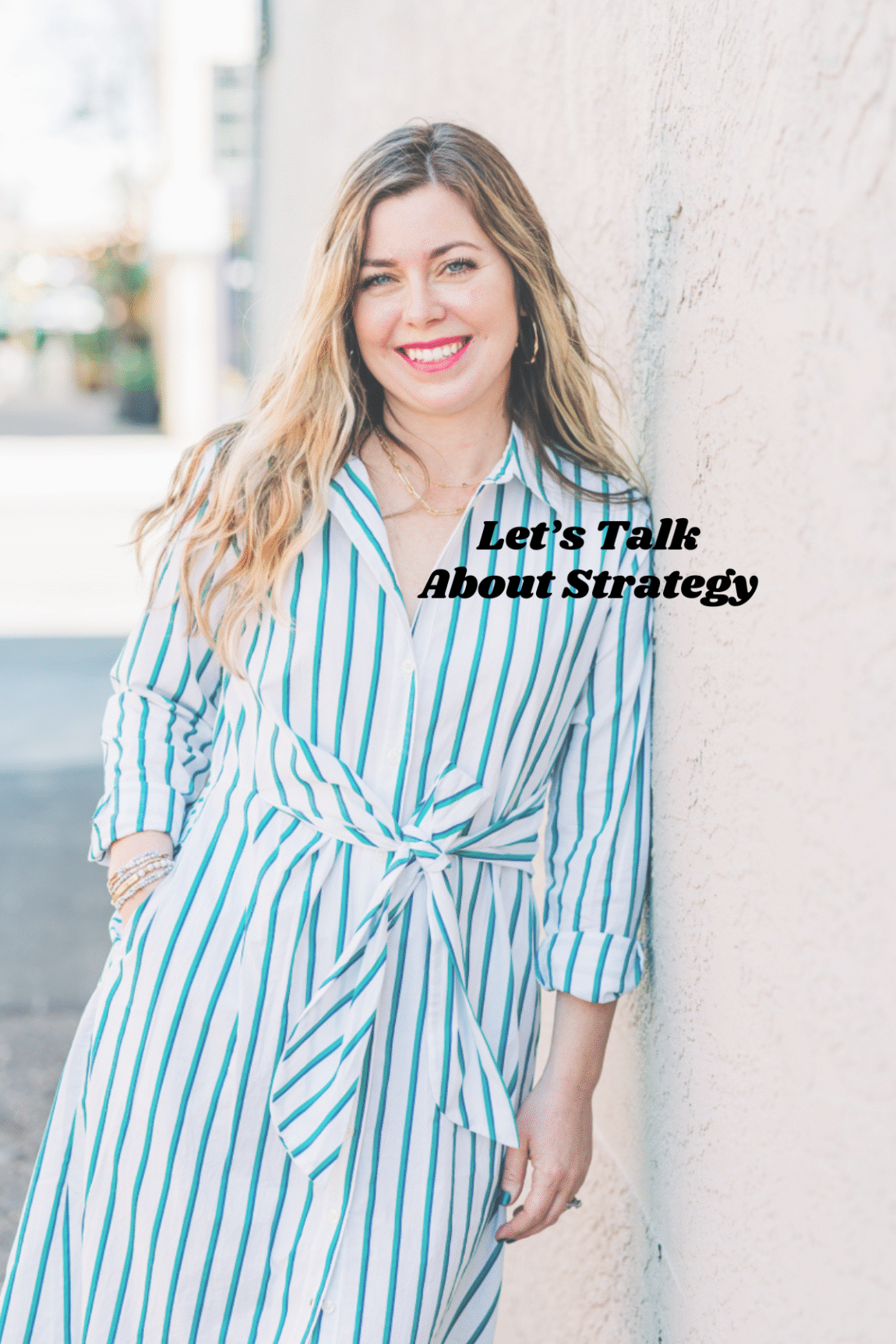
Erica Vander Sande with the words Let's Talk About Strategy

A strategic guide to website redesign, website refresh, and brand-aligned digital growth

There is a quiet moment in almost every growing business when something starts to feel slightly out of sync.

Nothing is broken.
Your website is not “bad.”
But it no longer feels like a full reflection of who you are now.

Your experience has deepened. Your positioning has sharpened. Your clients may be more refined. Your offers are clearer. Your pricing has likely evolved. You are operating at a different level than you were even a year or two ago.

And yet your website is still telling the older version of the story.

That is usually when we get the call.

At The Mina Company, we work with established, service-based businesses that are growing into their next phase. Most of the time, the issue is not visibility alone. It is alignment. When your website no longer matches your brand authority, your growth goals, or your audience, it quietly creates friction.

A strategic website is not a digital brochure.
It is positioning.
It is infrastructure.
It is a conversion strategy.

When it evolves with your business, momentum follows.


What Does “Updating a Website” Actually Mean?

Many business owners ask:

  • Do I need a brand-new website?
  • Can I just refresh what I have?
  • Is this a design issue or a strategy issue?
  • How do I know if my website is hurting conversions?

The answer depends on your growth stage and goals.

Website evolution typically falls into three categories:

  1. Full website build (from the ground up)
  2. Strategic website refresh or refinement
  3. Brand and website realignment for scaling

Here is what each looks like in practice.


1. Building a New Website From the Ground Up

Best for: Businesses that have outgrown their original positioning, audience, or structure.

When a company evolves significantly, incremental updates are not enough. The foundation itself must shift.

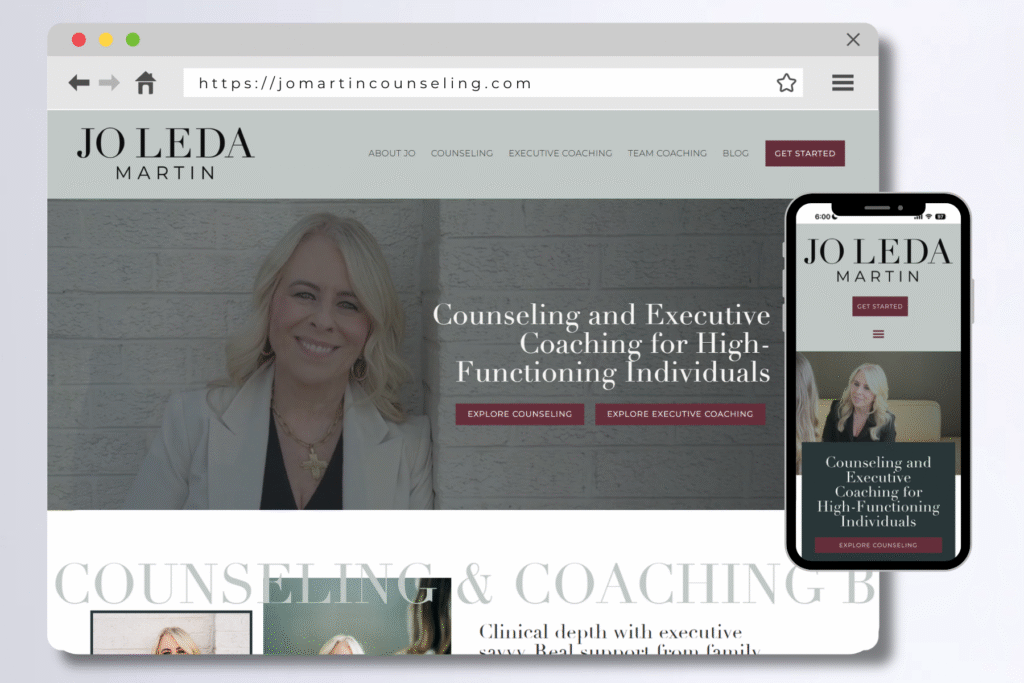
Case Example: Jo Leda Counseling

Jo Leda Counseling

Jo Leda Martin counseling website shown on desktop and mobile

For Jo Leda Counseling, the objective was elevation. The work she was doing with high-capacity leaders had expanded. Her authority had deepened. The website needed to reflect that level of clarity and confidence.

Strategic Focus Areas:

  • Refined positioning for executive leaders and decision-makers
  • Elevated brand visuals aligned with professional authority
  • Clear messaging that bridges personal and professional growth
  • Conversion pathways that feel direct but not pushy

Why a Full Rebuild Was Necessary

A website rebuild is recommended when:

  • Your ideal client has changed significantly
  • Your pricing or service model has evolved
  • Your brand identity has matured
  • Your current structure limits SEO performance
  • Your design undermines perceived authority

Outcome:
A website that supports higher-level clients, clearer authority positioning, and long-term organic visibility.


2. Refining and Refreshing an Existing Website

Best for: Businesses with a strong foundation that needs optimization, clarity, and cohesion.

Not every business needs a full redesign. Sometimes the structure is solid, but messaging and design require refinement.

Case Example: Arnica Mental Health

Arnica Mental Health

Arnica Mental Health already had a functional website. The core structure worked. However, the messaging did not fully reflect specialization areas like ADHD and trauma-informed therapy.

Strategic Refinement Focus:

  • Clarifying specialty keywords (ADHD therapy, trauma therapy, adult mental health)
  • Strengthening on-page SEO and content hierarchy
  • Simplifying user navigation
  • Improving visual cohesion and readability

When a Website Refresh Is the Right Move

A website refresh is often ideal if:

  • Your messaging feels vague
  • Your homepage does not clearly communicate your niche
  • Your SEO is underperforming
  • Visitors are not converting into inquiries
  • Your design feels inconsistent but not fundamentally flawed

Outcome:
Stronger search visibility, clearer specialization authority, and smoother user flow.


3. Aligning Website + Brand for Scalable Growth

Best for: Businesses preparing for expansion, partnerships, speaking, or new offers.

When your brand evolves, your website must support not only credibility but scalability.

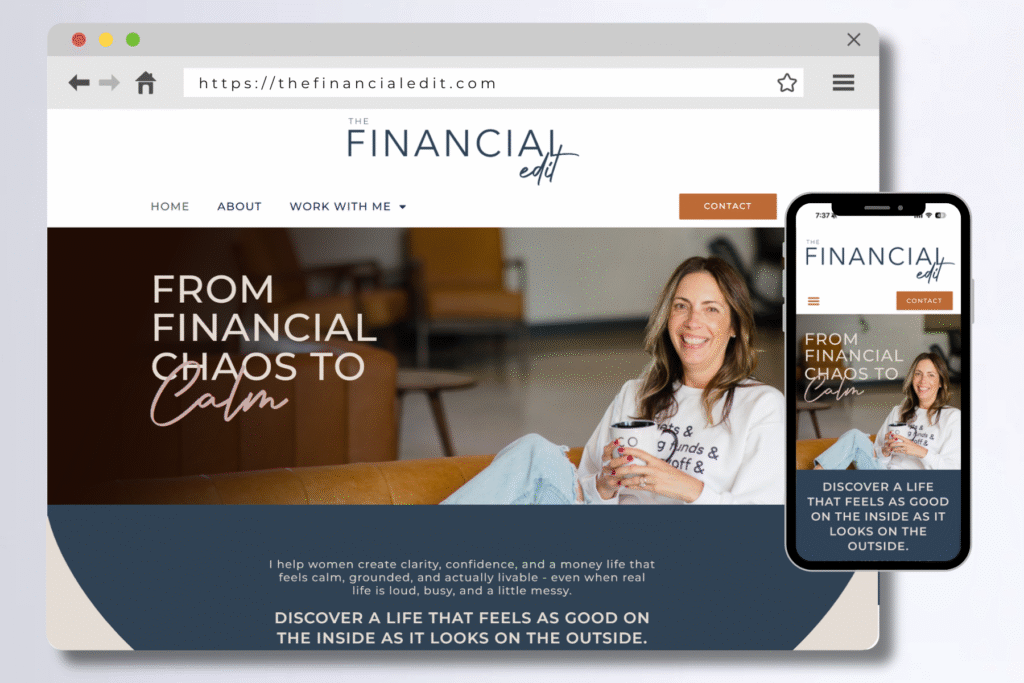
Case Example: The Financial Edit

The Financial Edit

Financial coaching website, From Financial Chaos to Calm, shown on desktop and mobile

The Financial Edit had matured into a more authoritative financial education brand. The website needed to communicate both accessibility and expertise.

Strategic Alignment Focus:

  • Clarifying service and offer hierarchy
  • Strengthening messaging authority without losing warmth
  • Enhancing SEO structure for long-term content growth
  • Creating a cohesive visual identity aligned with trust

Why Alignment Matters for Growth

When preparing to scale, your website should:

  • Support thought leadership
  • Convert higher-value clients
  • Reflect brand maturity
  • Align visually and strategically across all platforms
  • Work seamlessly with email, ads, and content marketing

Outcome:
A website positioned as a growth asset rather than a static online presence.


How to Know If It’s Time to Redesign or Refresh Your Website

You may need a website redesign or strategic refresh if:

  • You hesitate to send people to your website.
  • Your brand visuals have evolved but your website has not.
  • Your offers have changed or expanded.
  • Your pricing has increased.
  • Your inquiry rate has plateaued.
  • You are attracting the wrong type of client.
  • Your messaging no longer feels accurate.

A high-performing website should:

  • Clearly communicate who you serve
  • Establish authority quickly
  • Guide visitors through a natural conversion path
  • Support SEO visibility
  • Reflect your current brand level

If it does not, alignment work may be necessary.


Strategy First. Design Second.

One of the biggest misconceptions about website redesign is that it is primarily about aesthetics.

Design matters. But strategy matters more.

At The Mina Company, website projects begin with:

  • Audience clarity
  • Offer refinement
  • Brand voice alignment
  • SEO structure planning
  • Conversion pathway mapping

Because a visually beautiful website without strategic positioning does not convert.

A strategically built website becomes:

  • A client acquisition system
  • A credibility anchor
  • A scalable marketing asset
  • A long-term visibility engine

What Results Can a Strategic Website Deliver?

When aligned properly, a website can:

  • Increase qualified inquiries
  • Improve search engine rankings
  • Attract higher-level clients
  • Shorten sales cycles
  • Strengthen perceived authority
  • Support long-term content marketing

Website alignment is not a cosmetic update. It is operational infrastructure for growth.


Frequently Asked Questions

1. How do I know if I need a full website redesign or just a refresh?

If your audience, pricing, or positioning has changed significantly, a full redesign may be necessary. If your structure is solid but your messaging or design feels outdated, a strategic refresh may be sufficient. A professional audit can clarify which approach supports your growth goals.

2. How often should a business update its website?

Most growing businesses should revisit their website strategy every 18–36 months. This does not always mean a redesign, but it should include SEO updates, messaging refinement, and conversion optimization to stay aligned with market shifts.

3. Does redesigning a website help with SEO?

Yes—when done strategically. A redesign that includes keyword optimization, content restructuring, internal linking, and technical improvements can significantly improve organic visibility. However, aesthetic changes alone will not impact search performance.


A Website Should Reflect Where You’re Going

Your website should not just reflect where you have been.
It should support where you are headed.

If your business has evolved, your digital presence should evolve with it.

Whether that means a full rebuild, a thoughtful refinement, or a strategic realignment, alignment is often the missing piece between growth and sustainable momentum.

When strategy, structure, and brand clarity work together, your website becomes more than a platform.

It becomes infrastructure.

Thinking about a website refresh? See our website development services.

Share
Website Development

Building a Strong Online Presence for Your Therapy Practice: Website Essentials

September 8, 2025
Two Mina Company team members holding laptops

For most people seeking therapy, the first step isn’t picking up the phone—it’s Googling.

That means your website isn’t just a “digital business card.” It’s often the first impression a potential client has of your practice. A thoughtful, well-optimized site can make the difference between someone booking a session…or clicking away to the next therapist down the street.

At The Mina Company, we help mental health practices across Colorado strengthen their online presence, starting with a website that’s both beautiful and functional. Here’s what every therapy and counseling website design needs in 2025.


1. Clear Services & Specialties

Potential clients want to know right away if you’re the right fit. Make your specialties visible on your homepage and services page. For example:

  • Anxiety and stress management
  • Couples counseling
  • Teen therapy
  • Trauma-informed care

Pro Tip: Use Colorado-specific keywords (“Fort Collins teen therapy” or “Denver anxiety counseling”) to boost your search ranking.


2. Simple Ways to Book or Contact

Therapy clients often reach out in moments of stress or vulnerability. The booking process should be simple and welcoming:

  • Click-to-call buttons for mobile visitors
  • A clear “Request an Appointment” button on every page
  • HIPAA-compliant forms or portals for intake

The easier you make it, the more likely someone will take that first step.


3. Strong Local SEO

Showing up in “therapist near me” searches is essential for Colorado practices competing in places like Denver, Boulder, or Fort Collins. Make sure your site includes:

  • City-specific keywords in titles and headings
  • Embedded Google Maps on your contact page
  • Blog posts tied to local needs (e.g., “Managing Stress During Colorado Wildfire Season”)

4. A Welcoming, Professional Counseling Website Design

A therapy website should feel calming, trustworthy, and approachable—not overwhelming or clinical. The design should reflect your practice’s energy while staying professional.

Think: warm imagery, clear fonts, and simple navigation that helps people feel at ease.

This is where thoughtful counseling website design comes in—it’s about more than looks. It’s about creating a site that reassures potential clients that they’re in the right place.


5. Optimized for AI Search

With Google’s new AI-driven results (SGE), it’s not enough to just have a website. Your site should include:

  • Conversational FAQs (e.g., “How much does counseling cost in Colorado?”)
  • Clear, structured answers that AI search can easily pull from
  • Up-to-date content that signals authority and relevance

This ensures your practice continues showing up in both traditional and AI-driven search results.


6. Ethical Testimonials & Reviews

If clients are willing to share, testimonials can be powerful. But they must be shared ethically and in compliance with privacy laws.

Pair these with reviews on your Google Business Profile to build trust and improve your local rankings.


Why Work with a Marketing Partner Who Gets Counseling Website Design

Building or refreshing your practice website isn’t just about design—it’s about making sure your site speaks to the people who need you most, while staying compliant and competitive.

The Mina Company helps therapy practices across Colorado create websites that are:
✅ HIPAA-aware
✅ SEO and AI-optimized
✅ Welcoming and easy to navigate
✅ Built to convert visitors into clients


Ready to Refresh Your Website?

👉 Schedule a Consultation with The Mina Company and let’s make sure your online presence reflects the quality of care you provide.

Thinking about a website refresh? See our website development services.

Share
Website Development

Why Working with SEO Web Design Companies Sets You Up for Success

March 28, 2025
SEO Web Design Companies - The Mina Company

In today’s digital world, your website isn’t just a business card — it’s your handshake, your elevator pitch, and your warmest welcome all rolled into one. And if you’re not working with SEO web design companies that get both your brand and the backend tech that drives visibility? You’re likely leaving money (and momentum) on the table.

What Are SEO Web Design Companies?

SEO web design companies specialize in creating beautiful, functional websites that are also strategically built to rank on search engines like Google. They understand that aesthetics alone don’t drive traffic — and traffic without strategy doesn’t convert. It’s about finding the sweet spot where search visibility meets brand alignment.

At The Mina Company, we’ve seen firsthand how a well-designed site paired with a solid SEO strategy can shift a business from stuck to scaling. (Check out our marketing strategy services for a deeper look.)

Why SEO + Design = Magic

Let’s be real: a pretty site that never gets found is a digital ghost town. On the flip side, a site packed with keywords but clunky to use can push your dream clients away faster than you can say “bounce rate.”

Here’s what SEO-savvy web design companies do differently:

  • Mobile-First Design – Because more than 60% of searches happen on mobile devices.
  • Fast Load Times – Google (and your visitors) won’t wait around. Tools like Google PageSpeed Insights can help monitor this.
  • Keyword Strategy Built In – From image alt text to header structure.
  • Clear Calls-to-Action (CTAs) – Guiding visitors from interest to action.
  • User-Friendly Navigation – For humans and search engine crawlers.

What to Look for in a Web Design Partner

Choosing a web design company isn’t just about portfolios and price points. It’s about alignment — with your brand, your audience, and your long-term goals. Here’s what we recommend looking for:

  • A proven SEO strategy baked into their process
  • Content structure that supports long-term growth
  • Ongoing support or training post-launch
  • An understanding of your ideal client’s journey

Need help evaluating a partner? We dive into this in our free brand clarity checklist.

You want someone who listens to your vision, but also challenges you with strategies that convert. If they can’t talk you through the why behind their design and SEO decisions? That’s a red flag.

Why It Matters More for Women-Led Brands

As women-owned businesses, we’re often building something bigger than ourselves — something purpose-driven, intuitive, and connected. A website that reflects that depth while performing like a machine? That’s not fluff. That’s a must.

We’re not here to play small. And neither should your online presence.

Check out how we help women entrepreneurs thrive online through strategic design and storytelling.

Want help getting found on Google? See our SEO services for small businesses. Planning a new site? Explore our website development services.

Share

Follow us on the gram!

Are you a home builder looking for a marketing team who can make the most of your busy season? You’re not alone. This is the time of year most builders reach out to us.

Custom homes are a long, high-trust sale. Buyers want to see your work, get a feel for how you build, and trust you before they ever pick up the phone. At The Mina Company, we help custom home builders and service-based contractors turn thoughtful design, quality work, and local reputation into a powerful marketing presence.

That’s what’s behind these numbers. SEO that keeps builders on page one month after month. Websites and ads that turn searches into real inquiries. Social that shows off the craftsmanship before the first call. We do this for residential and commercial builders, here in Colorado and across the country.

And we only partner with one builder per area. You’ll never share a strategy with the competitor across town.

Ready to see what this could look like for your business? DM us or visit theminacompany.com 

#TheMinaCompany #HomeBuilderMarketing #CustomHomeBuilder #ConstructionMarketing #SEOforBuilders #BuilderMarketing #ContractorMarketing #NoCoSmallBusiness #FortCollinsMarketing #NorthernColorado
•
Follow
Are you a home builder looking for a marketing team who can make the most of your busy season? You’re not alone. This is the time of year most builders reach out to us. Custom homes are a long, high-trust sale. Buyers want to see your work, get a feel for how you build, and trust you before they ever pick up the phone. At The Mina Company, we help custom home builders and service-based contractors turn thoughtful design, quality work, and local reputation into a powerful marketing presence. That’s what’s behind these numbers. SEO that keeps builders on page one month after month. Websites and ads that turn searches into real inquiries. Social that shows off the craftsmanship before the first call. We do this for residential and commercial builders, here in Colorado and across the country. And we only partner with one builder per area. You’ll never share a strategy with the competitor across town. Ready to see what this could look like for your business? DM us or visit theminacompany.com #TheMinaCompany #HomeBuilderMarketing #CustomHomeBuilder #ConstructionMarketing #SEOforBuilders #BuilderMarketing #ContractorMarketing #NoCoSmallBusiness #FortCollinsMarketing #NorthernColorado
2 days ago
View on Instagram |
1/5
Some seasons, the smartest spend is less.

We've tested the alternative across every industry we work in. More ads, more SEO, more effort poured into the slow months. The season stayed slow anyway. Demand has its own rhythm, and no budget is big enough to argue with it.

So we don't ask our clients to keep pouring money into a season that won't pay it back. We'd rather protect your budget for the stretches where it actually moves the needle, and ease off when it doesn't. Some of our clients pause entirely when things are quiet, and we pick right back up when their busy season returns.

Your marketing should work with your calendar, not against it.

Want a partner who'll tell you when to spend less? DM us or visit theminacompany.com
•
Follow
Some seasons, the smartest spend is less. We've tested the alternative across every industry we work in. More ads, more SEO, more effort poured into the slow months. The season stayed slow anyway. Demand has its own rhythm, and no budget is big enough to argue with it. So we don't ask our clients to keep pouring money into a season that won't pay it back. We'd rather protect your budget for the stretches where it actually moves the needle, and ease off when it doesn't. Some of our clients pause entirely when things are quiet, and we pick right back up when their busy season returns. Your marketing should work with your calendar, not against it. Want a partner who'll tell you when to spend less? DM us or visit theminacompany.com
6 days ago
View on Instagram |
2/5
Ep. 7 is out now: Creating the Vision & Mission 🧭

In the hallway between Erica’s bedroom and her daughters’ rooms hangs Theodore Roosevelt’s “Man in the Arena” quote, rewritten for women. The credit belongs to the woman in the arena, the one who dares greatly. It’s become the quote her whole life runs on, and it’s what pushed her to take a hard look at The Mina Company’s vision, mission, and purpose for the first time in years.

In this episode, Erica breaks down the difference between the three, shares the new versions she wrote for Mina (including the line with a little bite: “even when it costs us”), and explains how she turned them into real, day-to-day decisions her team makes. She also shares a simple place to start your own: notice what you’re jealous of when you see it out in the wild.

Listen here ericavandersande.com/podcast or wherever you listen to podcasts 

#ConversationsInTheDark #VisionAndMission #BusinessValues #DaringGreatly #WomenInBusiness #FemaleFounder #Entrepreneurship #Motherhood #SmallBusinessPodcast
•
Follow
Ep. 7 is out now: Creating the Vision & Mission 🧭 In the hallway between Erica’s bedroom and her daughters’ rooms hangs Theodore Roosevelt’s “Man in the Arena” quote, rewritten for women. The credit belongs to the woman in the arena, the one who dares greatly. It’s become the quote her whole life runs on, and it’s what pushed her to take a hard look at The Mina Company’s vision, mission, and purpose for the first time in years. In this episode, Erica breaks down the difference between the three, shares the new versions she wrote for Mina (including the line with a little bite: “even when it costs us”), and explains how she turned them into real, day-to-day decisions her team makes. She also shares a simple place to start your own: notice what you’re jealous of when you see it out in the wild. Listen here ericavandersande.com/podcast or wherever you listen to podcasts #ConversationsInTheDark #VisionAndMission #BusinessValues #DaringGreatly #WomenInBusiness #FemaleFounder #Entrepreneurship #Motherhood #SmallBusinessPodcast
7 days ago
View on Instagram |
3/5
Most agencies are built to grow the invoice. More services, more add-ons, more reasons to keep you spending. It's just how the model usually works.

We wrote our purpose around the opposite instinct: to always act in our clients' best interest, even when it costs us. That line only means something if we live it in the moments where doing right by you and making more money pull in different directions.

So that's the standard we hold every decision to. When those two things conflict, you win. Not because it's the easy call, but because it's the one we'd want made if it were our own business on the line.

It's a slower way to grow. It's also the only way to build an agency people actually trust.
•
Follow
Most agencies are built to grow the invoice. More services, more add-ons, more reasons to keep you spending. It's just how the model usually works. We wrote our purpose around the opposite instinct: to always act in our clients' best interest, even when it costs us. That line only means something if we live it in the moments where doing right by you and making more money pull in different directions. So that's the standard we hold every decision to. When those two things conflict, you win. Not because it's the easy call, but because it's the one we'd want made if it were our own business on the line. It's a slower way to grow. It's also the only way to build an agency people actually trust.
1 week ago
View on Instagram |
4/5
We’re adding a Marketing Account Manager to the Mina team!

Our Account Managers are the bridge between our clients and our team. They know each client’s goals, keep the work on track, and make sure nothing falls through the cracks.

We’re looking for someone with agency experience who enjoys juggling multiple clients and building long-term relationships. You don’t need to be an expert in everything. We value curiosity and a willingness to keep learning just as much.

The role is flexible and remote-friendly, and it’s a great fit for someone who wants meaningful work that leaves room for the rest of life.

Know someone who’d be a great fit? Tag them below or share this post. 💙
•
Follow
We’re adding a Marketing Account Manager to the Mina team! Our Account Managers are the bridge between our clients and our team. They know each client’s goals, keep the work on track, and make sure nothing falls through the cracks. We’re looking for someone with agency experience who enjoys juggling multiple clients and building long-term relationships. You don’t need to be an expert in everything. We value curiosity and a willingness to keep learning just as much. The role is flexible and remote-friendly, and it’s a great fit for someone who wants meaningful work that leaves room for the rest of life. Know someone who’d be a great fit? Tag them below or share this post. 💙
2 weeks ago
View on Instagram |
5/5
@TheMinaCompany

Copyright © 2026 The Mina Company. All Rights Reserved.Site Powered by Pix & Hue.